Client
Revenue Base
Website
https://revenuebase.ai/
Contribution
As a sole product designer, I redesigned RevenueBase from a sales-dependent demo process into a self-serve data marketplace. I led discovery, defined information architecture, designed the core portal flows, and built the visual language from scratch — reducing prospect-to-purchase time from 30 days to under a week.
Scroll down
PROBLEM STATEMENT
RevenueBase was selling B2B data the hard way: every purchase required demos, custom previews, and back-and-forth with internal teams. Prospects couldn't evaluate coverage, compare datasets, or assess fit on their own — so the average sales cycle stretched to 30 days.
The business had a scaling problem. The product had a trust problem. My job was to fix both.
My Role as a Product Designer was:
Conducted stakeholder interviews
Defined information architecture
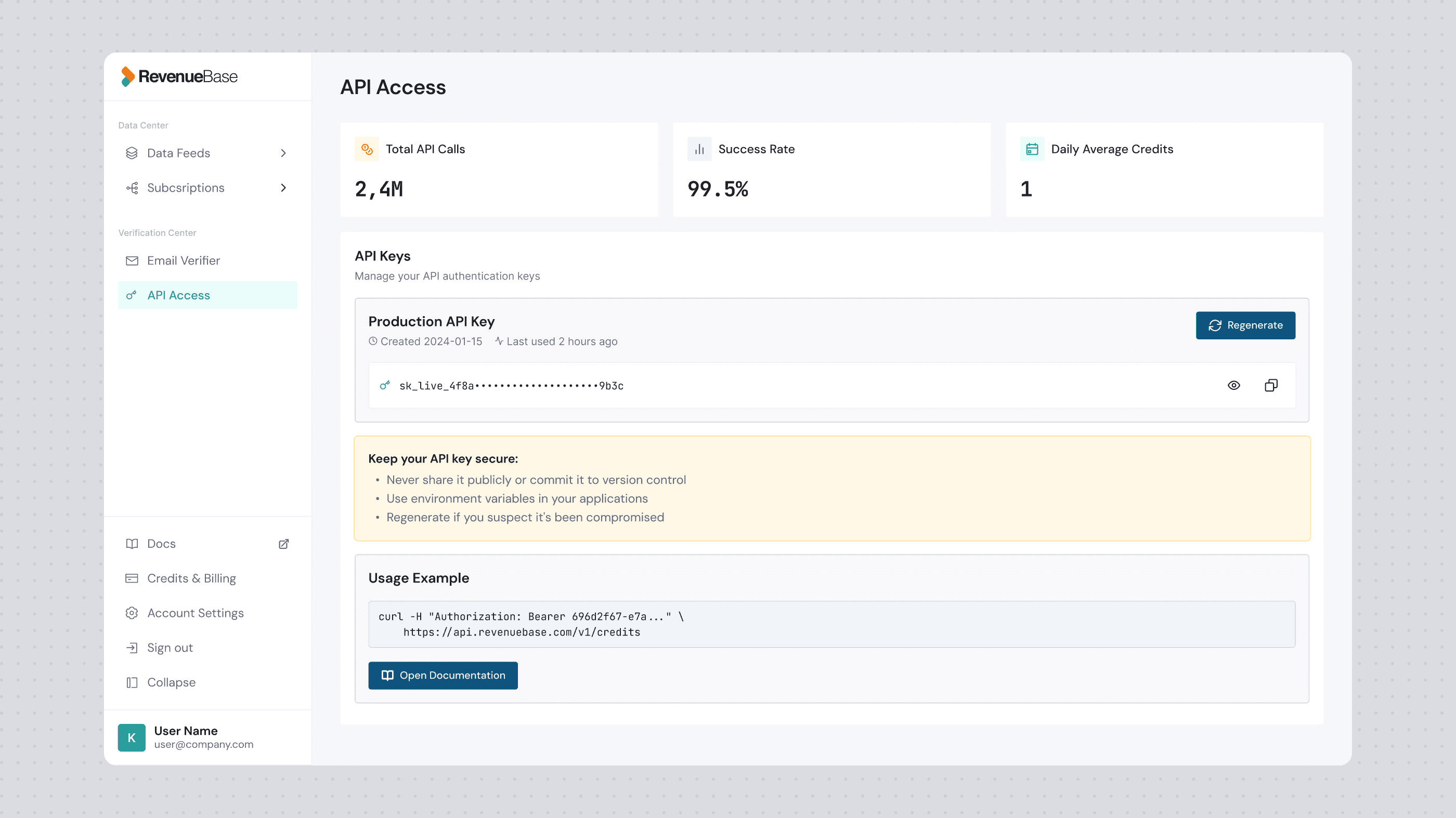
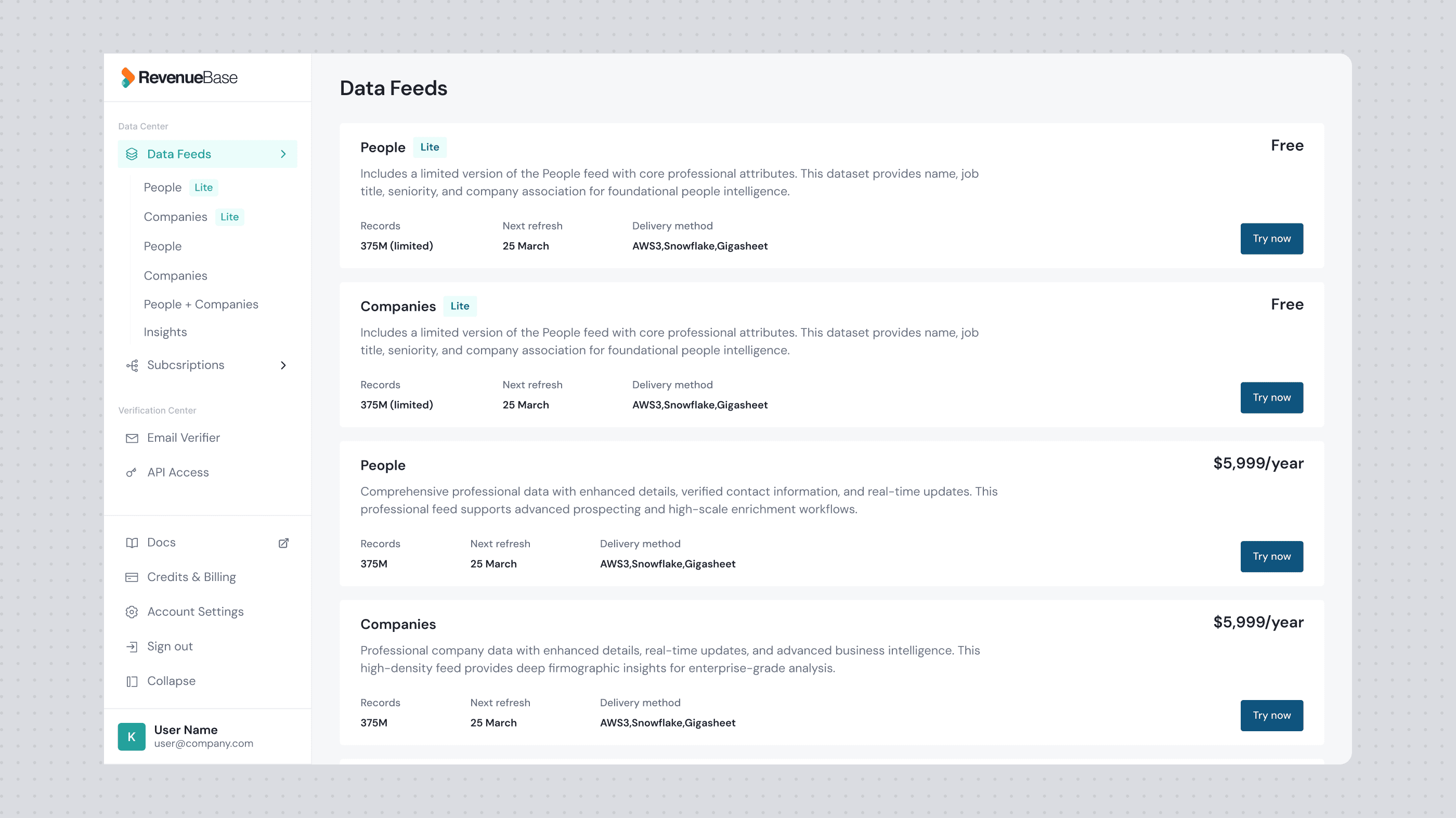
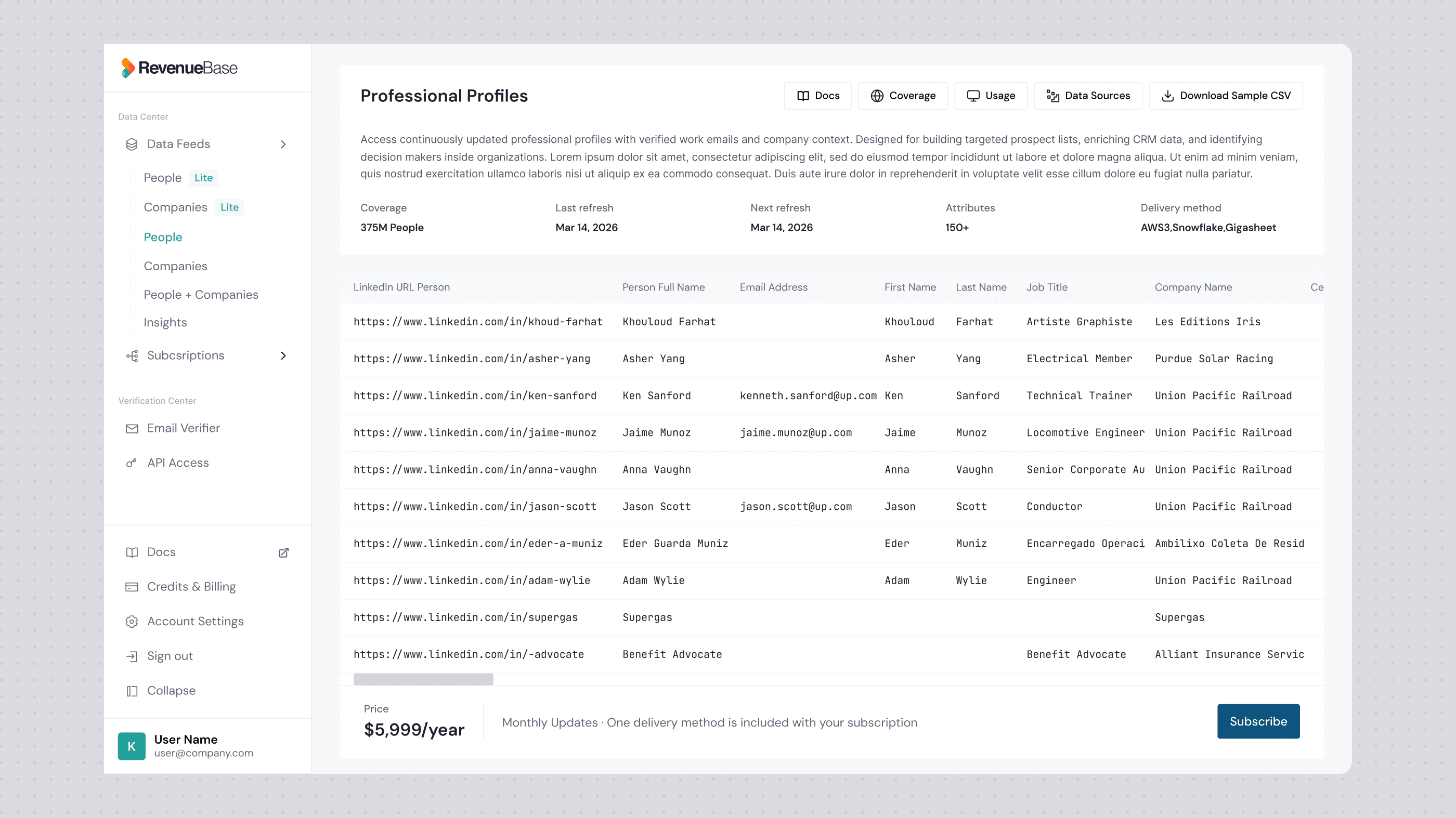
Designed core portal flows
Built a scalable design system and visual language
Constrains
Technical delivery constraints
Data was delivered via Snowflake, AWS S3, and Gigasheet. Every interface decision had to reflect real backend limitations — not an ideal flow.
Research
Sales team interview
I learned how data feeds were actually sold: sales answered questions about coverage, freshness, and connectivity were never visible upfront. Users had no way to self-qualify.
Data architect interview
I mapped how databases connected — S3 buckets, Snowflake shares, API endpoints. This defined what "delivery method" meant in the UI and what constraints I couldn't design around.
Key insight:
Users weren't just buying data. They were buying confidence that the data would work. The product had to communicate data health: freshness, coverage, connectivity — not just a list of records.
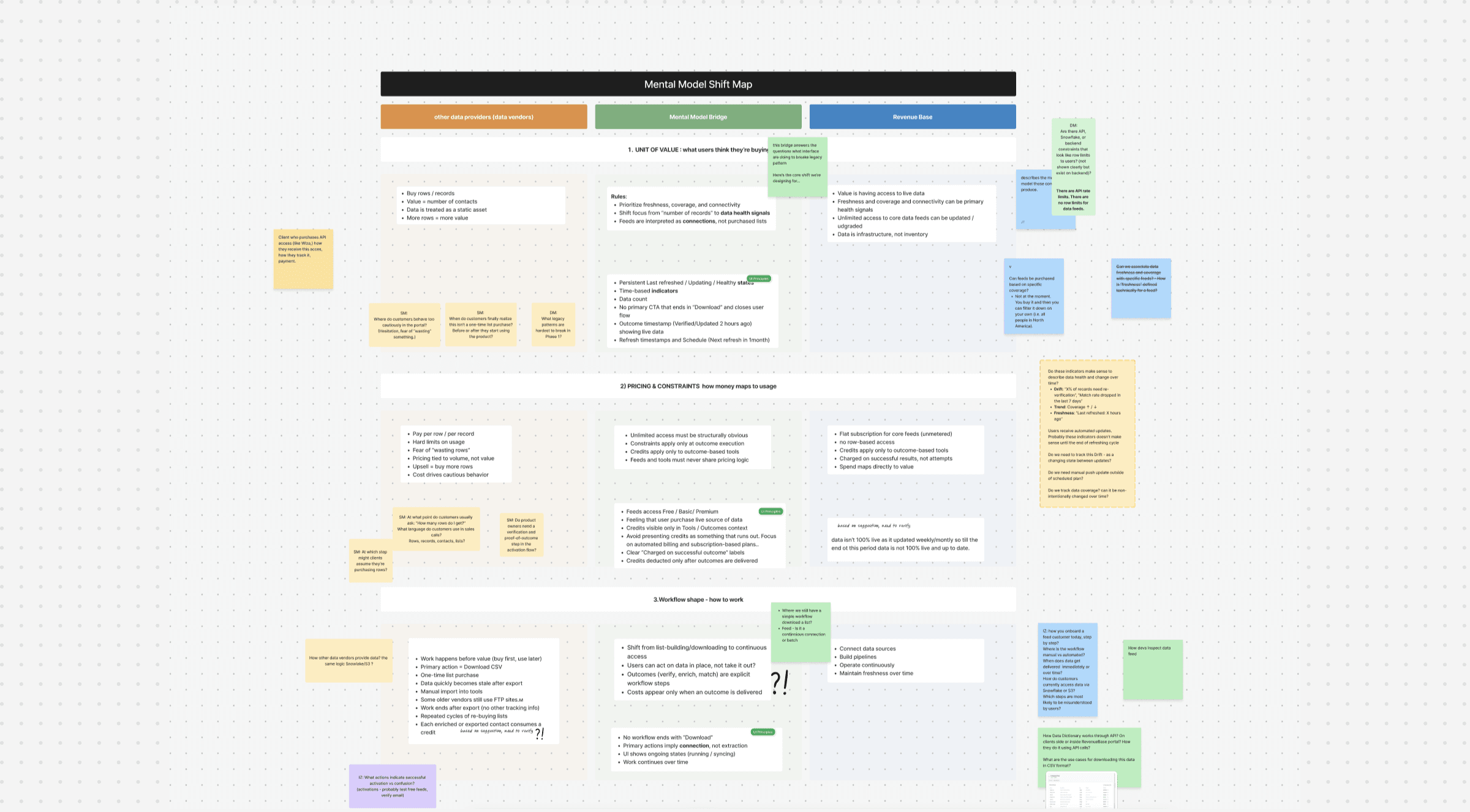
Before designing any screens, I mapped the gap between how legacy vendors sell data and how RevenueBase needed to be understood.
The core shift: users were coming in with a "rows = value" mental model (pay per record, fear wasting rows). RevenueBase needed to reframe data as infrastructure flat subscription, unlimited access, charged on outcomes not attempts.
This map became the north star for every UX decision: terminology, pricing display, onboarding language, and CTA copy.
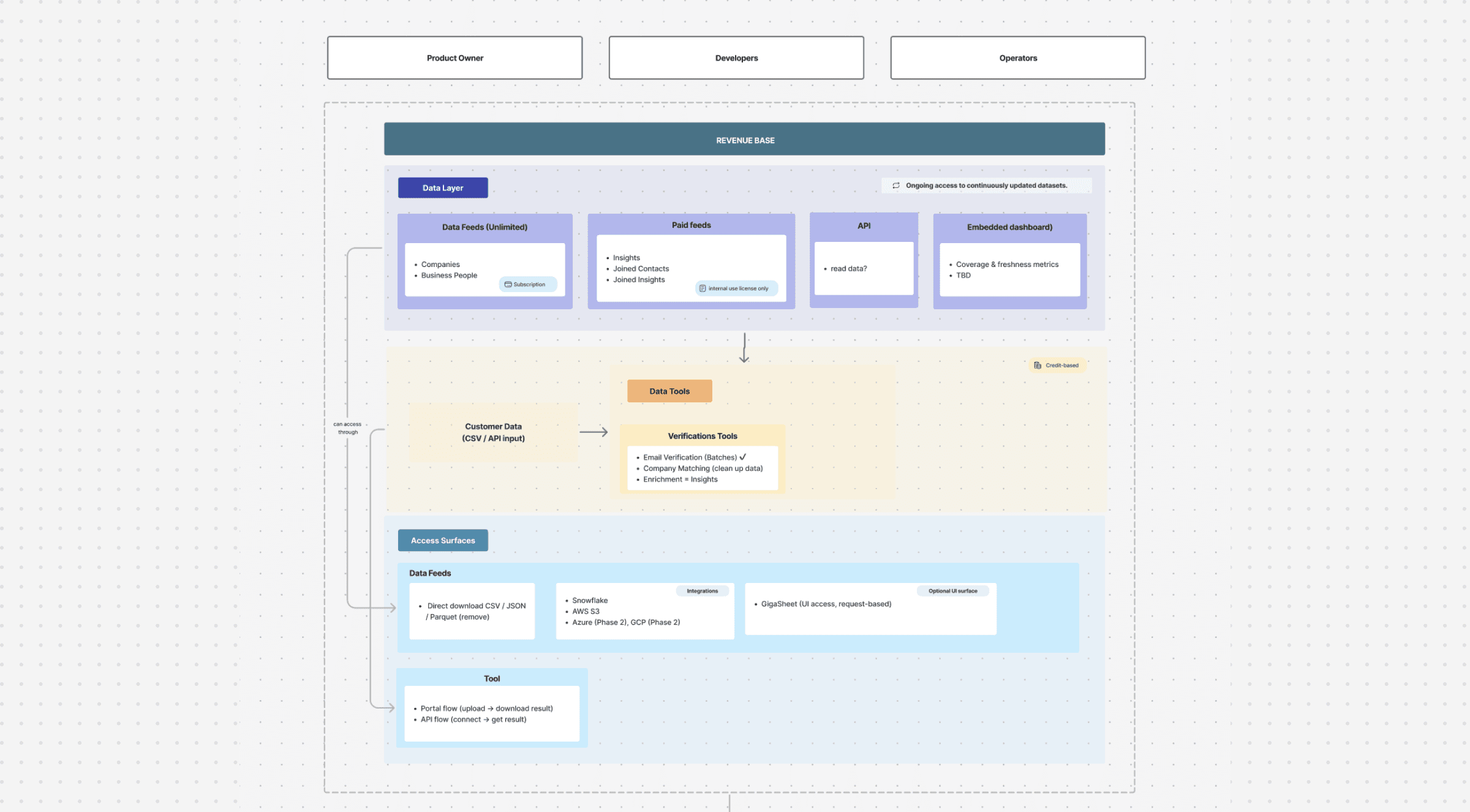
Working directly with C-level leadership, I mapped how three distinct user groups: Product Owners, Developers, and Operators - interact with RevenueBase across Data Feeds, API, and Email Verification tools.
This diagram became the foundation for information architecture decisions: what each role sees first, what actions they can take, and how delivery methods (Snowflake, AWS S3, Azure) map to user expectations.
Key Design Decisions
Data health signals instead of row counts" Legacy tools show "2.4M records." We show freshness, drift rate, last verified. This directly addressed the trust gap from research.
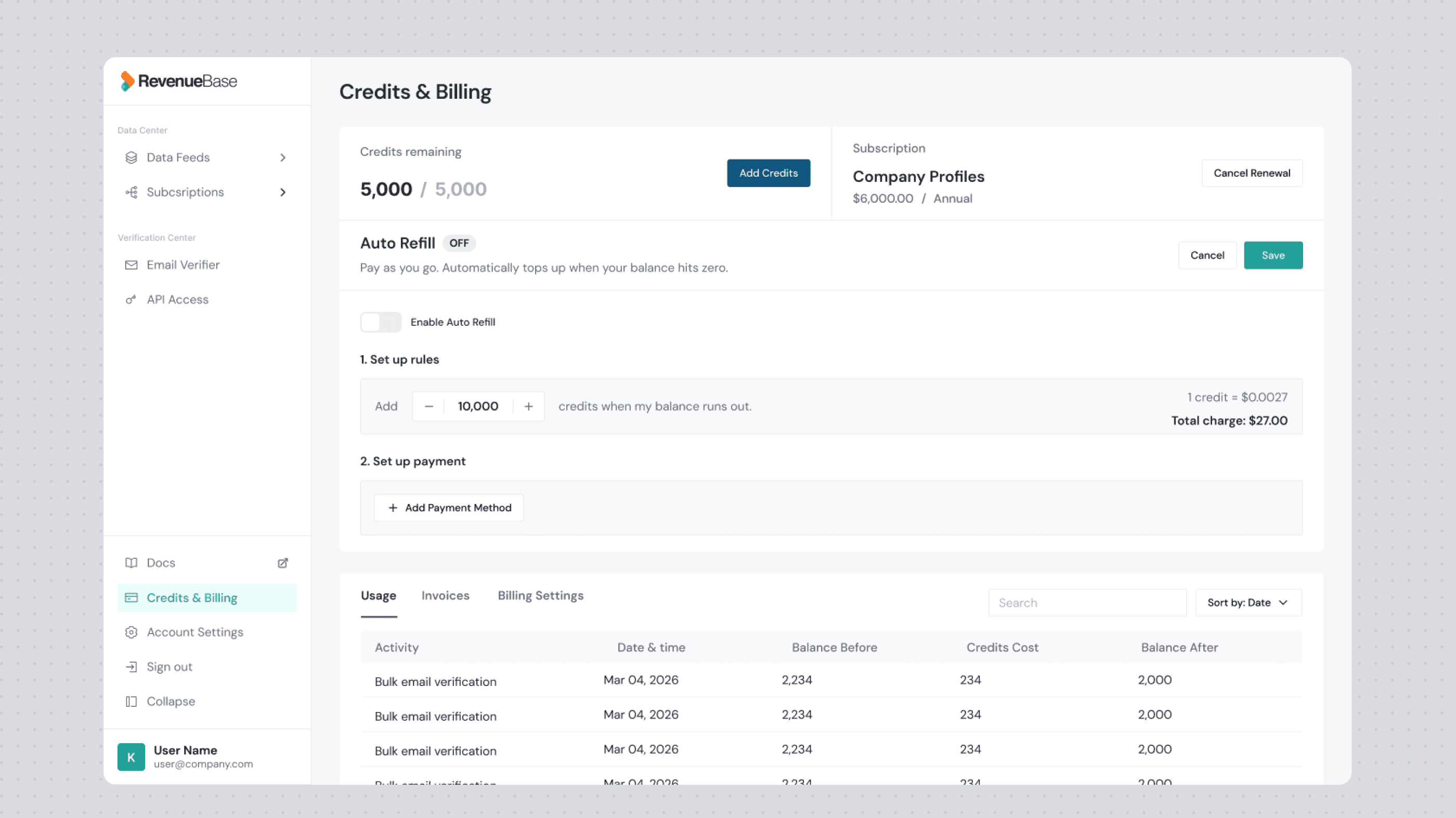
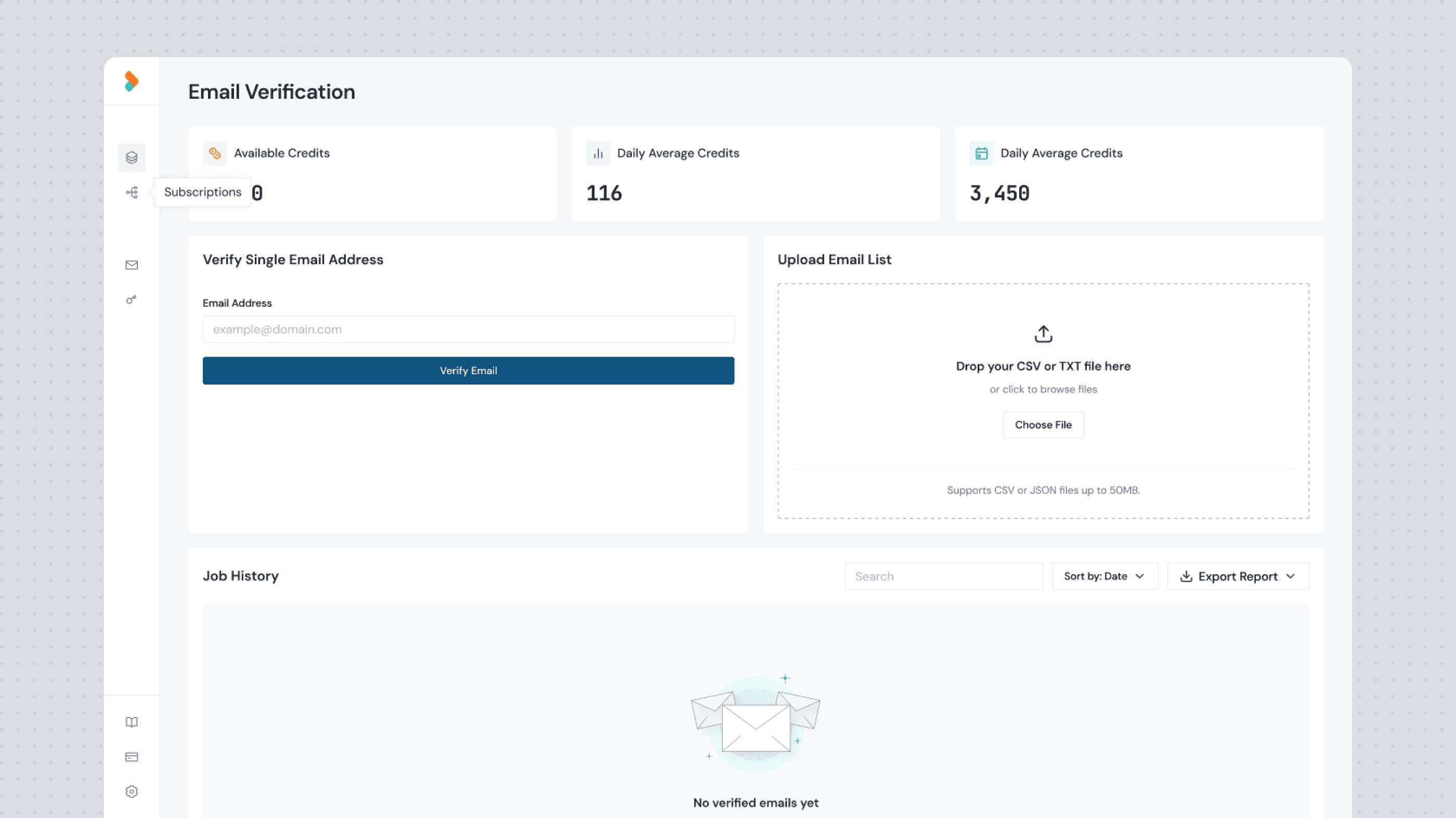
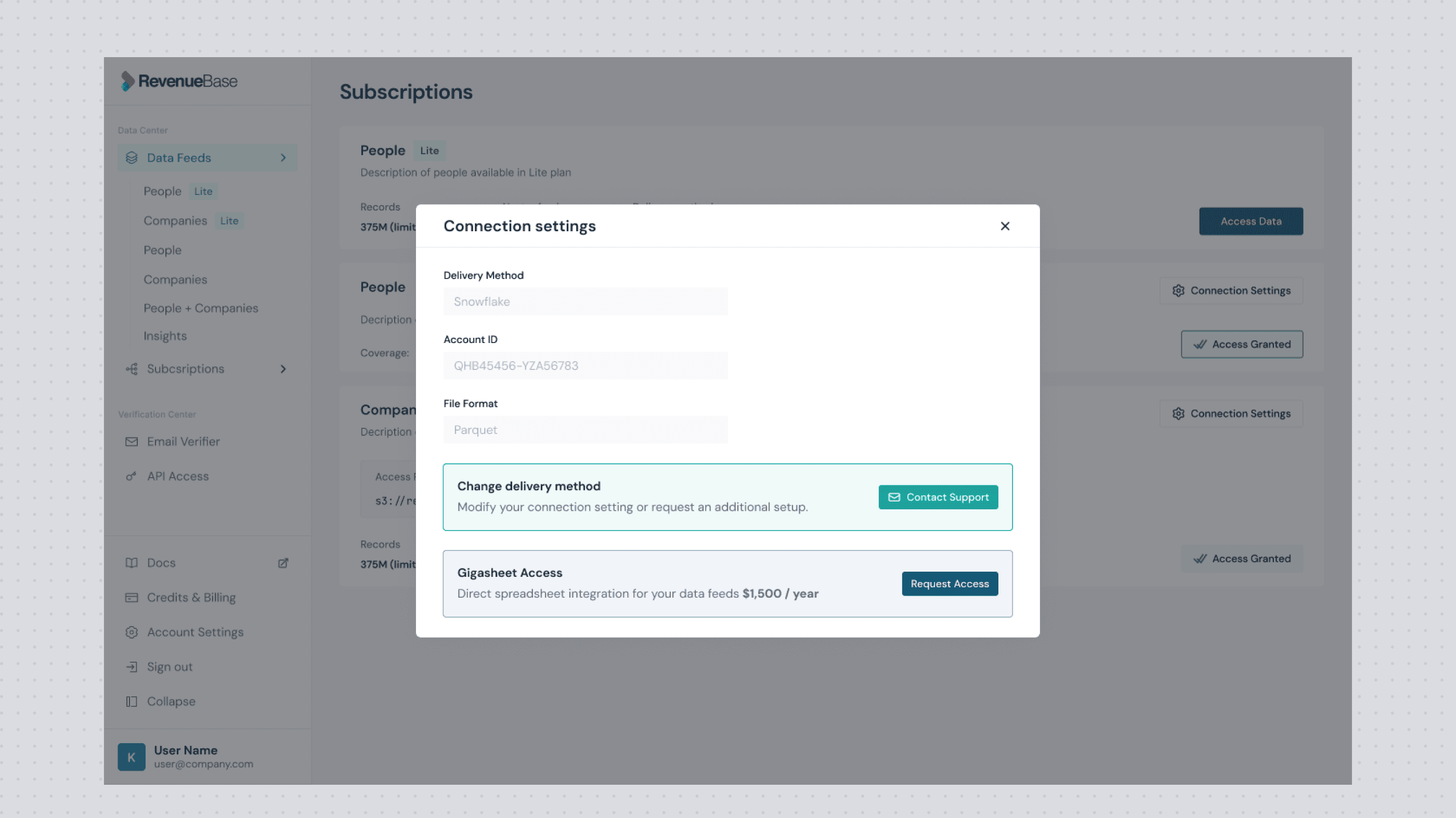
Result: Sales cycle changed from 30 days to 2–7 days. Prospects can now evaluate coverage, compare feeds, and complete purchase independently without a single demo or internal handoff.
The shift from sales-led to self-serve wasn't just a UX improvement, it removed a structural bottleneck in how RevenueBase could scale.